Kovno Ghetto Council
City of GodThe Kovno Ghetto Council was the Jewish administrative body that governed daily life inside the Kovno Ghetto during the Holocaust, charged with supplying labor brigades to German military factories while secretly maintaining a forbidden historical archive. Under the leadership of Dr. Sigmund Koenig and his chief aide Josef Barbanel, the council balanced the impossible demands of German authorities against the survival of the ghetto's Jewish population, and its clandestine documentation of ghetto life—including Barbanel's diary and the testimony of a young runner named Yehoshua—became the novel's central instrument for recovering and transmitting Holocaust memory.
Structure and Daily Operations
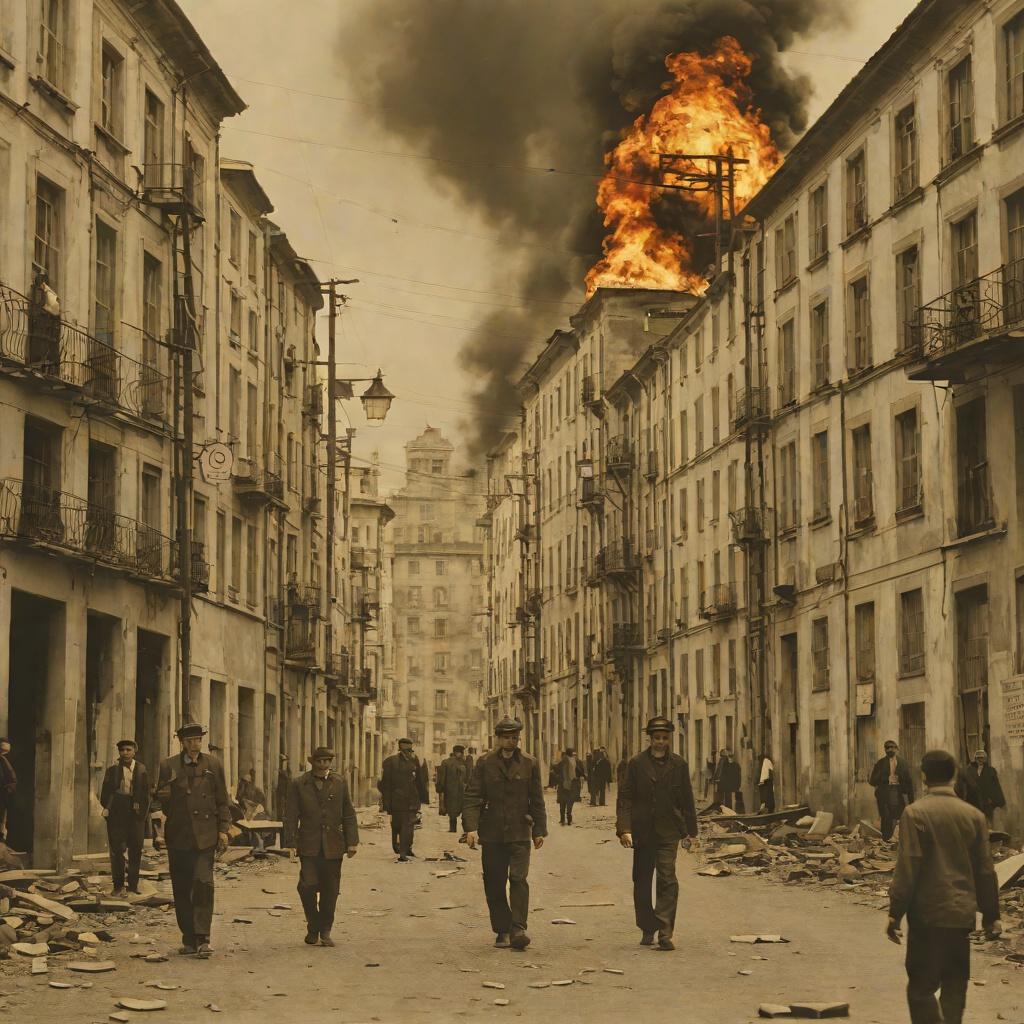
The council's overall duty was to provide on a daily basis worker brigades for the military factories in the city. If this was not done, if the Germans thought the ghetto was not productive enough, that would be the end of the community. While the men and the younger women were conscripted for labor, most women and the less able men were assigned to maintain the ghetto itself—the bakery, the hospital, the laundry, and so on—so that women as well had to be fit. The council's authority extended to the protection of individuals: when a head of family committed a crime or was otherwise designated for execution, it was German policy to kill his dependents as well, and it was to the council that orphaned children were brought to be given new names and identities. The council office was a busy place where the pale terrified face of a child was a warning signal the staff knew all too well, and where boys were summoned and dispatched to spread word among the houses and shops for people not known to the Germans to go into hiding.
Leadership: Dr. Sigmund Koenig and Josef Barbanel
The council president was Dr. Sigmund Koenig, a handsome man in his sixties, a man of great dignity, a good six feet tall. He wore no coat or hat even in the cold, which did not seem to bother him, and he was neatly dressed in a gray double-breasted suit with a clean shirt and tie. His only suit was threadbare, hanging in a way that suggested his own physical wear and tear, with a loose shirt collar around his neck and well-worn black shoes; the right eyepiece of his spectacles was cracked, so that his eye itself seemed fractured. Nevertheless, everything about him was meticulous—clean-shaven, with fine silver hair combed back in a long wave that caught the young runner Yehoshua's attention as something poetic, the pennant of some medieval knight flowing above him as he cantered into battle. When the crowd gathered in the street in front of the council office after the tailor Srebnitsky's act, Koenig's mere appearance stilled the small crowd; he told them he was awaiting a call from the ghetto commandant as to exactly what was to be done but that he doubted there was any immediate danger of a major action, speaking almost in a whisper.
The second in charge was Mr. Barbanel, the chief assistant to Dr. Koenig, a man Yehoshua would come to revere. He was about thirty-five, by far the youngest member of the council, a thickset man with a good honest face, a thatch of black hair, and dark eyes under thick black eyebrows and a wide mouth and a Slavic ski nose that looked as if it had been punched into shape. He could joke and he could talk to a child. Barbanel had been a dealer in lumber before the war, and because he was a younger man he generally took bolder positions than Dr. Koenig in council discussions. It was good morale for the boys that he poked fun at the enemy, made fun of their ways. When Yehoshua asked him one day if he was by profession a historian, Barbanel looked surprised for a moment and then smiled and shook his head. "You are one smart kid, Yehoshua," he said. "Yes, I'm a historian, by necessity. But you wouldn't tell anyone, would you." This was a statement, not a question, and Yehoshua swore he wouldn't and they shook hands on it.
The Secret Archive and the Runners
Whenever Barbanel received reports, he either wrote down verbatim what he was told or asked the person reporting to write a statement. He kept a diary in which he reported everything that happened, along with the relevant documentation—the latest regulations, the execution orders, the deaths, minutes of the council meetings, orders signed by the infamous Commandant Schmitz, proscriptions, dicta, identity papers for the work details—every imaginable item went into this history of his. He used whatever paper he had on hand, including unused student exercise books. His handwriting was a neat Yiddish, like stitches sewn into the page, the characters very small, the words flying off his pen line after line in his passion to say what happened each day, each moment, of the captives' lives. His doing this was illegal; the Germans were quite aware of their culpability and forbade unauthorized writings or photographs, and they had confiscated all cameras. But as the chief aide to Dr. Koenig, Barbanel had always to be writing something, and it was relatively easy for him to enfold this within his formal duties. The diary, by the time Yehoshua was aware of it, must have run into thousands of pages, volumes, a whole trunk full of material.
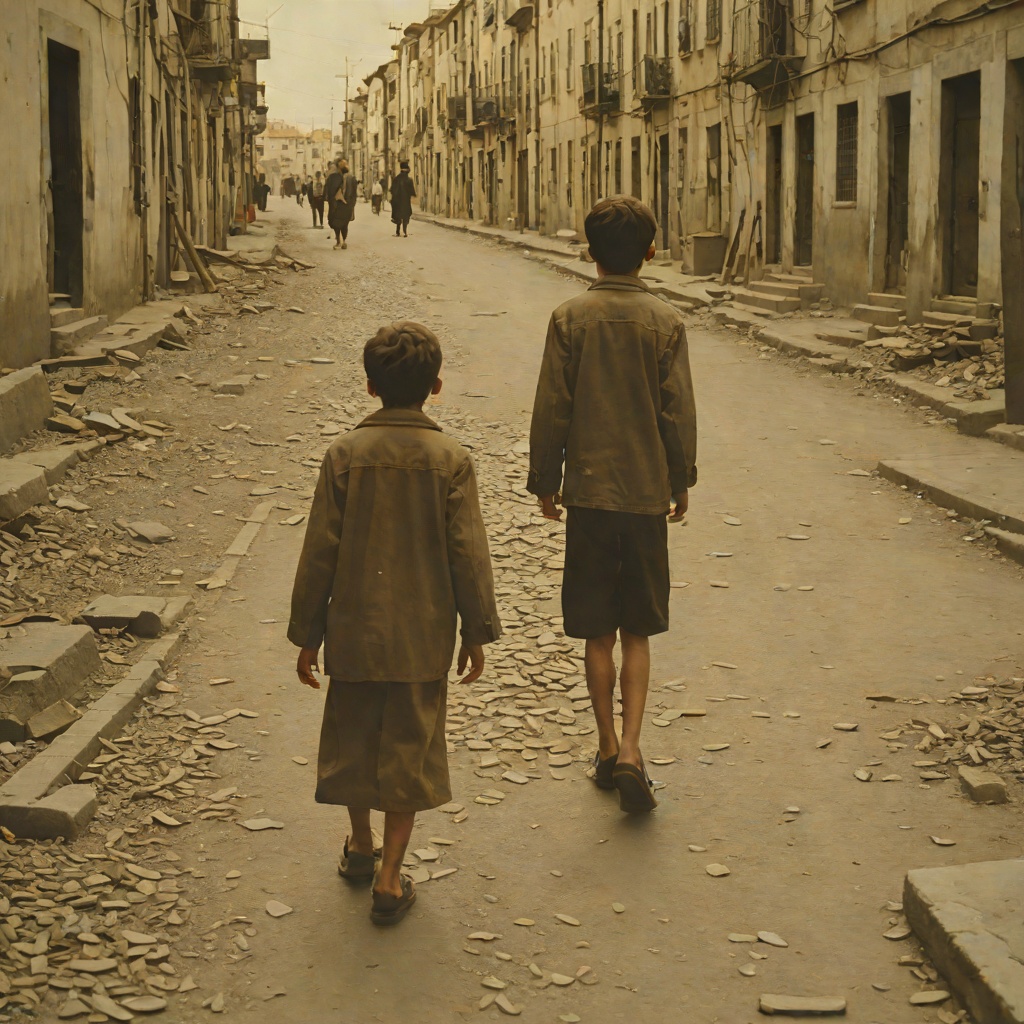
The council also maintained a corps of runners—seven boys who wore special caps, like police caps, with a military brim, and stars sewn on their jackets. Their job was to carry news or instructions from the council to the families in their houses, or messages from one council member to another, or to stand watch by the square at the entrance to the bridge to let people know if the open car was coming with the half-track filled with soldiers just behind it, which meant the next bad thing was about to occur. Barbanel said of Yehoshua that he was his best runner, and for the most important matters he chose him. When Yehoshua was orphaned and brought to the council, Barbanel squatted in front of him with a garrison cap of just the kind he had seen on the other boys and plopped it on his head, thereby placing him under the wing of the council itself as a designated runner, known to all as Yehoshua, though with no last name and with no identity card for his protection. The runners' military sense of themselves was, as Yehoshua later reflected, all very perverted—he felt privileged that the star was not like all the other stars but some indication of rank, and the military-style hat, and knowing what was going on almost before anyone else all made him feel special, even while he sometimes secretly admired the uniforms of the enemies and knew full well what was happening.
The Srebnitsky Crisis and the Gallows
When the tailor Srebnitsky committed his act, Yehoshua ran to the council office by himself, and his arrival immediately stilled everyone in that busy place. Several boys were summoned and dispatched to spread the word among the houses and shops for people not known to the Germans to go into hiding. In a matter of minutes, everyone in the ghetto knew what the tailor had done, and the news came back that he had been apprehended and taken to the Gestapo headquarters. People began to gather in the street in front of the council office, and rumors were rife—the price for Srebnitsky's act would be thirty, fifty, a hundred Jewish dead. Several times Barbanel had to go outside and tell the crowd to disperse and go about their business. In clear distinction to the public, who were becoming increasingly agitated, the council staff remained calm, with Koenig the calmest of everyone, perhaps the source of the calm. It was sometime in the afternoon that a German soldier on a motorcycle arrived with a written order that the council immediately provide carpenters to construct a gallows in the town square leading to the bridge. Shortly thereafter, Koenig was able to reach the commandant by phone and was told all Jews were to be in the square at dawn to witness the hanging of the tailor Srebnitsky. To everyone but Yehoshua, it seemed, that was a great relief.
The Archive's Survival and Recovery
Barbanel's diary was kept safe with the help of Greta Margolin, a nurse whose position was a factor in keeping it safe until she could smuggle it out of the ghetto, across the bridge, to a hiding place in the city or perhaps in the countryside. Since neither Barbanel nor Greta Margolin was to survive the destruction of the ghetto, the papers remained hidden in the earth of Eastern Europe, in its rubble, in the wreckage and ruination and dust of its Christian tradition. Decades later, the chest containing the archive was recovered and brought to New York, where Sarah Blumenthal, Pem, a young woman from the U.S. Attorney's office in New York, and various customs people watched as an inspector took up a hammer and chisel to open it. The chest sat on a steel table, larger than Sarah had understood from Pem's description—she had imagined it as the size of a footlocker, but it was larger, deeper, hammered together with big heavy nails and metallic corner pieces, painted white but with raw lumber where the paint had flaked off. The customs man found the rusted locks impervious and asked if he could pry off the hasps, which would splinter the wood; Sarah nodded her approval, and the sound of the splitting wood made her wince, as if her father's history were seeping into the room. The inspectors carefully lifted out packages of various sizes wrapped in oilskin, with an oilskin lining against the inner sides of the chest—the fierce preservation of these materials was unmistakable and, to Sarah, itself an urgent message that brought a sob to her throat. They unwrapped the packages to find sheaves of paper bound in twine, booklets, manuals, folders, rolled-up blueprints, diagrams, stapled documents, envelopes of various sizes, each labeled in a small, neat Yiddish script. In notebooks, students' bluebooks, and unbound pages, there was a diary in one increasingly familiar hand covering a period of three years, 1941 to the date in 1944 when the ghetto was dismantled and the survivors were marched to the railroad station, along with reams of documentation—rules and regulations issued by the Germans, innumerable orders with the signature of Commandant Schmitz, confiscating all domestic animals, then all wagons.
Sarah also found in the archive typed lists of those who had died in the ghetto and also those who were taken from the ghetto and never again seen, each name with a date and place of birth next to it, not infrequently the names of entire families. There was no time or distance in Sarah's apprehension of these pages; they were not historical but, in their simple exact notation, a curve of the universe's light flashing through her, lasing her consciousness into these leaves of paper, letter by letter, as if the newly dead were being written down as she read. And there was an envelope of forbidden little black-and-white photos: a line of men and women marching to work behind barbed wire, a husband and wife and their child on a bench having their picture taken with the cloth stars sewn to their coats, a woman on her knees in the vegetable garden, the members of the council posing in business suits with stars, a body in a business suit hanging from a gallows with the head awry staring heavenward, winter with snow on the ground, and seven little boys in front of a wood cabin standing at their idea of attention on the steps, wearing military-school caps and stars on their breasts that might possibly be imagined as insignia of their office as runners for the council—unsmiling little boys, one with shoulders hunched up in the instinctive posture of self-protection, all underdressed with short pants and sweaters and jackets they had outgrown, each of them at attention, feet together, arms pressed against his sides, looking into the camera in the full knowledge of death. Sarah found her father in the first row.
Narrative Significance
The council functions in the novel as the institutional heart of ghetto life, the place where the community's survival was negotiated daily against German power and where its memory was secretly preserved against German erasure. The testimony of Sarah's father, the runner Yehoshua, is the novel's primary witness to the council's work, and his account of Barbanel's archive—the diary, the documentation, the photographs—becomes the material basis for the novel's recovery of Holocaust history. The council's dual nature, at once an instrument of German administration and a site of resistance through documentation, embodies the novel's central concern with how history is recorded and transmitted. The recovery of the archive in the customs office, with Sarah wincing at the sound of splitting wood as if her father's history were seeping into the room, completes the arc from the council's secret preservation of memory to its belated reception by the next generation, making the Kovno Ghetto Council not merely a historical institution but the novel's model of how the dead are written down and remembered.